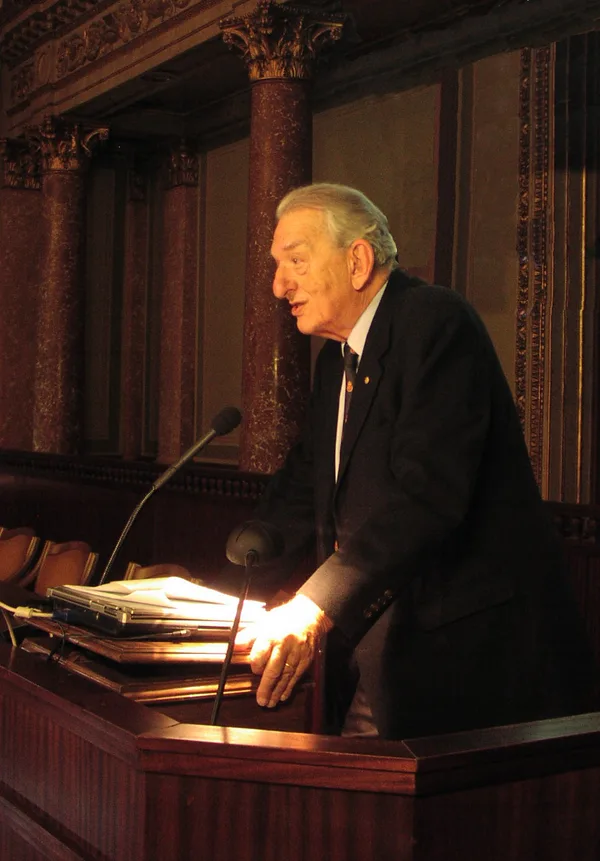
user:Bitman · CC BY-SA 3.0
George Andrew Olah
Hungarian chemist
1927 – 2017aged 89
George Andrew Olah spent decades figuring out how to trap carbocations — the fleeting, highly reactive molecular fragments central to organic chemistry — using superacids to hold them stable long enough to study directly, something no one had managed before. That work won him the 1994 Nobel Prize in Chemistry and reshaped how chemists understand reaction mechanisms. He fled Hungary after the failed 1956 revolution, working in Britain and Canada before settling permanently in the United States in 1965.